Why journaling matters
Without a record, every week starts from zero and the same mistakes repeat. A journal is how "process over prediction" becomes real: it shows whether your daily bias was right, whether you actually followed your risk rules, and which setups are carrying your results. The goal isn't to win every trade — it's to prove, with data, that your model survives over time.
What to log
Capture the story of the trade, not just the numbers:
- Context — daily bias, the liquidity you were trading against, and the session.
- Setup — sweep, structure shift, the FVG/IFVG you executed on.
- Execution — entry, stop, target, and your risk in R.
- Result & notes — outcome in R, and honestly: did you follow the plan or force it?
The review loop
Logging is only half of it — the value is in the review. Once a week, read back through your trades and look for patterns: which setups are positive expectancy, which session you trade best, where rule-breaks cost you. Keep what works, cut what doesn't, and carry one specific improvement into the next week. That loop — log, review, adjust — is the engine behind getting better.
Tools that help
You can journal in a spreadsheet, but a dedicated tracker like TradeZella auto-calculates the stats that matter — win rate, expectancy, average win/loss, drawdown — so you can't hide from them.
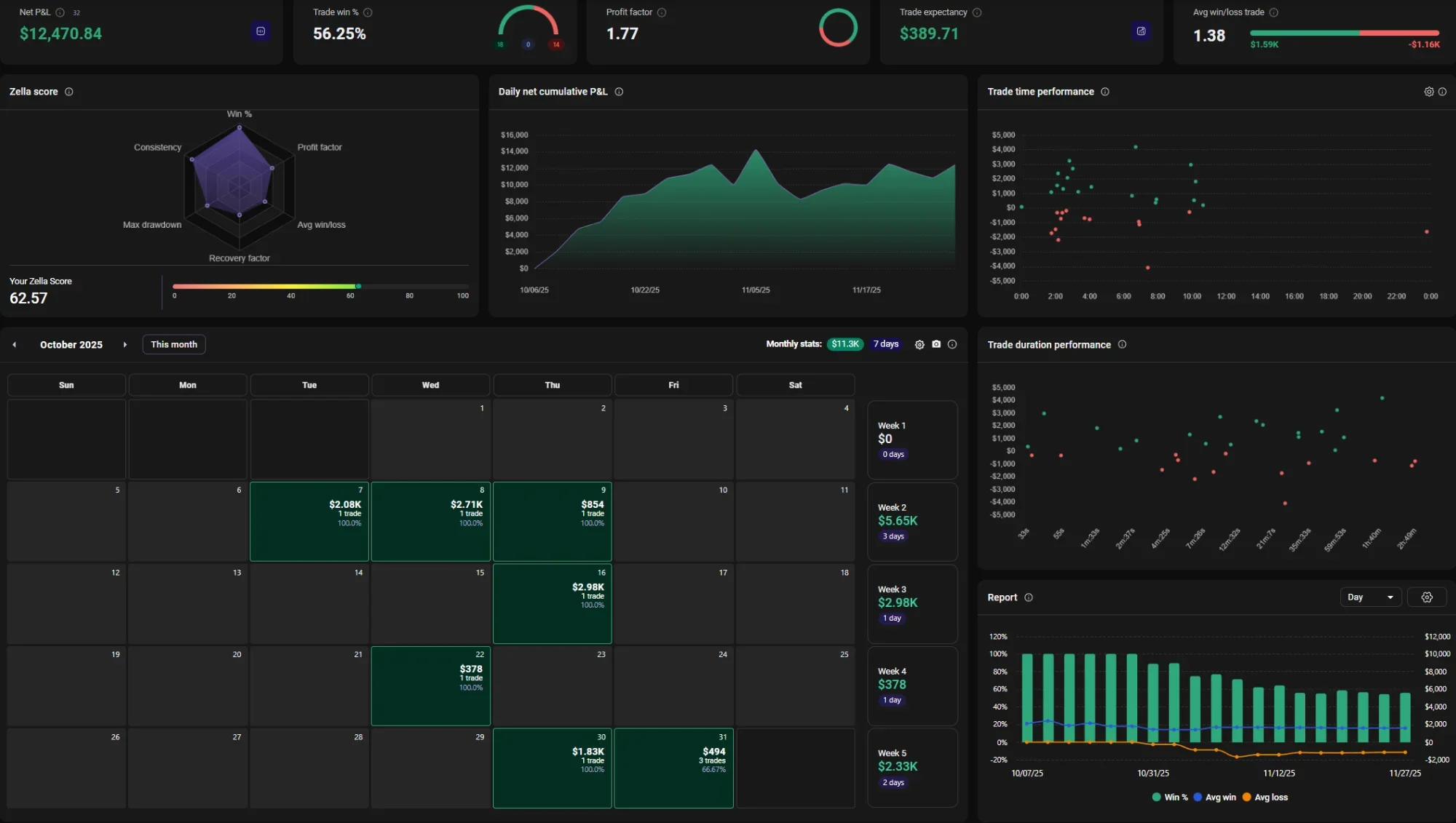
Whatever you use, consistency beats sophistication. A simple journal you actually fill in every day will teach you more than a perfect one you abandon.